The Google Ads Signal Flow Diagram:
Every channel, every signal, one system.
A poster-format map of how the Google advertising ecosystem actually connects — YouTube and Search at the signal layer, Demand Gen and Performance Max synthesizing intent, GA4 and Meridian MMM proving the value of the whole. Print it. Tape it to a wall. Argue with it.
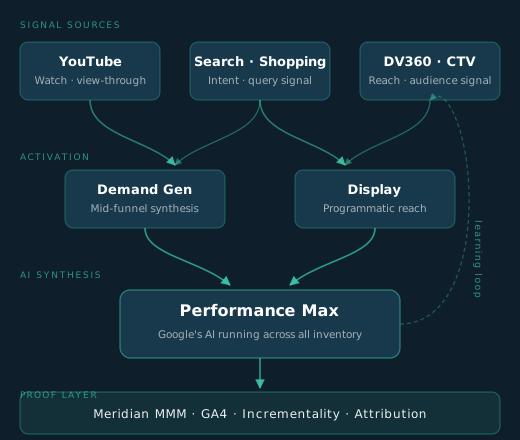
How to read the diagram
1. Signals flow up
YouTube, Search, and DV360 feed structured intent into the consideration layer. This is where most teams undervalue YouTube — it's not a brand channel, it's a signal channel.
2. AI synthesizes
Demand Gen and Performance Max read the upstream signals and decide where dollars go. The thicker the upstream signal density, the better the synthesis.
3. Measurement proves
GA4 and the MMM layer turn the loop into something the CFO can defend. The dashed lines are where most enterprise teams have a broken measurement loop — usually between PMax and incrementality.
Why this diagram exists
Most organizations still treat Google's products as separate channels with separate budgets and separate teams. That's the silo problem — and it's costing them compounding performance they'll never see, because the AI inside Performance Max only gets smarter when the upstream signals do. This diagram is the one-page argument for the opposite posture: treat the ecosystem as one connected system, engineer the signal environment, and let the AI do what AI is now good at.
It's the visual companion to the 2026 Signal Architecture Framework and the Performance Max signal feedback loop essay.
How people are using it
- Internal alignment. Print it to A2 and put it in the room where the planning meetings happen. The shape of the disagreement gets clearer fast.
- Vendor conversations. Use it to pressure-test what an agency or platform partner actually owns vs. what they pretend to.
- Onboarding. New hires on the marketing team get the whole ecosystem in one image instead of a 40-slide deck.
- Board / CFO conversations. The dashed measurement lines are where the credibility gap usually is. Pointing at them is faster than explaining them.
License & attribution
Free to use, share, print, and embed — with attribution to Uncommon Move (uncommonmove.com). If you re-publish the diagram in a deck, post, or article, a link back is appreciated but not required. If you spot something to improve, tell me — the diagram gets edited.